
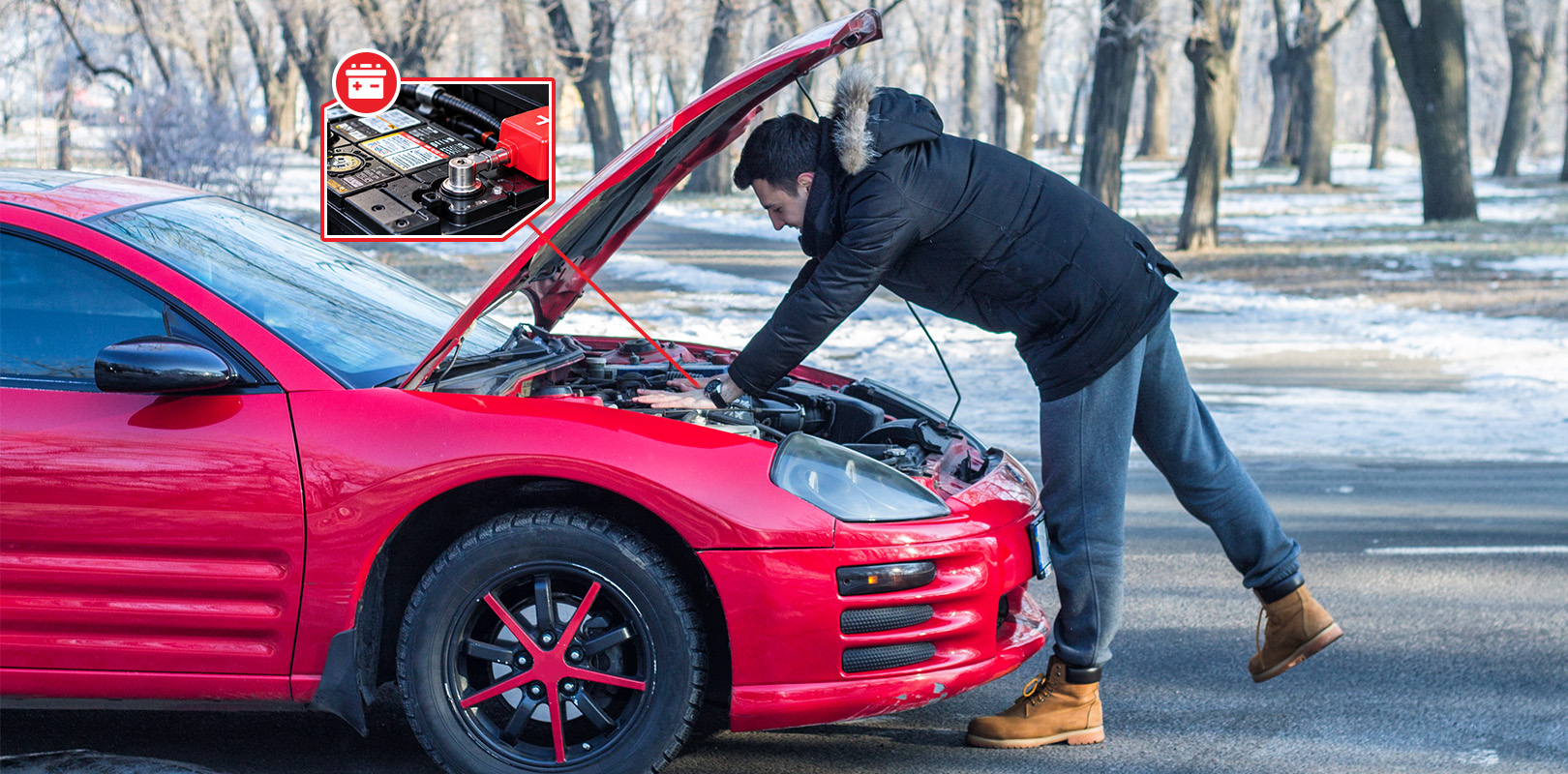

Winters in Kansas is no joke and there is one thing that chilly freezing weather does apart from beautiful view which is it drains up your car battery, ever wonder when on a one fine morning you decide to start your car and instead of listening an engine roar you hear dreaded click and then you couldn’t help but wonder “Why does my car battery keep dying when it’s cold?” Well, you’re not the only one who faces that, you’re far from alone.
In one recent Kansas storm, AAA Kansas calls jumped from 160 on Saturday to 570 on Monday, as drivers returned to work and found their cars wouldn’t start. Elsewhere, dead batteries made up 36% to 43% of roadside calls during cold snaps, and in one Philadelphia day, nearly half of all calls were for dead batteries because car batteries die in cold weather the cold slows the chemical reaction inside them, so they make less power just when your engine needs more.
The good news: you can find out if yours is at risk before winter does it for you.
Why Do Car Batteries Die in Cold Weather?
A few things stack up on a cold morning. Here’s what’s happening under your hood.1. The cold slows the chemistry
Think about how stiff and slow you feel when you step out into the freezing cold. Your battery is the same. The cold slows the chemical reaction inside it, so it makes less power. AAA says a battery can lose about 35% of its strength at 32°F, and about 60% at 0°F.2. Your engine gets harder to start
Cold turns engine oil thick, a bit like butter straight from the fridge. The starter has to push harder, so it pulls more power from a battery that already has less to give.3. Cold exposes tired batteries
Cold rarely kills a healthy battery. It shows you one that was already worn out. Most batteries last 3 to 5 years, and summer heat and short trips wear them down faster.4. Winter habits add extra load
The heater, defroster, heated seats, headlights, and phone chargers all draw power. A weak battery feels every one of them.It Keeps Happening in Kansas City: A Cold Snap Timeline
This isn’t a rare problem. Here is how it has played out around the metro.Mid-February 2021, Kansas. During the deep freeze, AAA Kansas said roadside calls doubled in a single week. About 75 to 80% were dead batteries or cold-related engine trouble. Mid-January 2024, Kansas City, MO. Record cold and ice hit the metro. On Monday, drivers slid off roads. By Tuesday, cars simply wouldn’t start. Santa Fe Tow Service broke its 24-hour record of 217 calls and was heading toward 250.A 2025 winter storm, Kansas. AAA Kansas took 160 calls on Saturday and 215 on Sunday. Then came Monday: 570 calls as drivers went back to work and started their cars for the first time since the freeze set in. January 26, 2026, Kansas City metro. Shops across the area reported a surge as drivers got stranded. One shop manager said batteries don’t always warn you. Sometimes the next start is just silence.What Kansas City drivers deal with
- Sudden deep freezes. In December 2016, Kansas City International dropped to −9°F.
- Cars that sit. Storms and holiday weekends leave cars parked for days. Then everyone starts them at once.
- Long waits. When tow and roadside crews are swamped, help takes time.
- Slick roads. A dead battery on an icy street is more than an annoyance.
Warning Signs Your Battery Is Struggling
Your battery usually drops hints first. Watch for:- A slow, sluggish engine crank
- Dim headlights or slow power windows
- Corrosion around the terminals
- A battery older than three years
How to Test Your Car Battery Before Winter
Being worried about your car is not that you’re overthinking the situation, it’s an actual problem and its good to test and check it out as soon as possible, you can do a basic check in about five minutes with a multimeter.- Let the car rest and keep the engine off. Wear gloves and eye protection.
- Clean the terminals. Corrosion can throw off your reading.
- Set the multimeter to DC voltage, 20V range. Red goes on the positive (+) terminal, black on the negative (−).
- Read the number: 12.6V or higher is fully charged. About 12.4V is roughly 75%. About 12.0V is roughly 50%. Below 12.0V is weak.
- Start the engine and test again. You should see around 14 volts. A much lower number can point to a charging problem, so get electrical system diagnostics.
How to Keep Your Battery From Dying This Winter
A few simple steps go a long way.- Match the CCA to your climate. Cold cranking amps (CCA) show how well a battery starts an engine in the cold. When you replace yours, a higher rating helps.
- Park in a garage when you can. Keeping the cold off the car gives the battery an easier time.
- Turn off extras before you shut the engine off. Heated seats, the heater, and the radio won’t be drawing power on your next start.
- Take longer drives. Your alternator recharges the battery as you drive, and short trips don’t give it enough time. If the car sits, start it and drive it now and then.
- Consider a battery blanket. If your area often drops below freezing, a plug-in battery warmer can help. Check your owner’s manual first.
Don’t Wait for the First Freeze
You can find out your battery is weak on a calm afternoon in October, or on a freezing Monday when the tow trucks are booked. One of those is a lot easier on your day. A multi-point vehicle inspection before the cold arrives checks your battery and the rest of your car in one visit.Why Choose SK Automotive
Nobody wants to guess whether their battery will survive winter. At SK Automotive in Kansas City, KS, you get ASE-certified technicians, same-day diagnostics, and clear estimates before any work begins. We care for everyday drivers and fleets across Kansas City, KS and MO, and drivers have left us 500+ Google reviews so Book an appointment and we’ll test your battery before the cold does.FAQs
1
Why does my car battery keep dying when it’s cold? Cold slows the reaction inside the battery and thickens engine oil. A weak or older battery often can’t handle both.
2
At what temperature do batteries lose power? Around freezing, a battery can lose about 20% of its capacity. Near 0°F, the loss can be about half.
3
How long does a car battery last? Most last 3 to 5 years. Heat, short trips, and heavy electrical use can shorten that.
4
Can a new battery die in the cold? Yes. Even a newer battery can struggle if it’s partly discharged or if temperatures drop low enough.
5
How often should I test my battery? Before winter and at least twice a year. Test more often after three year