
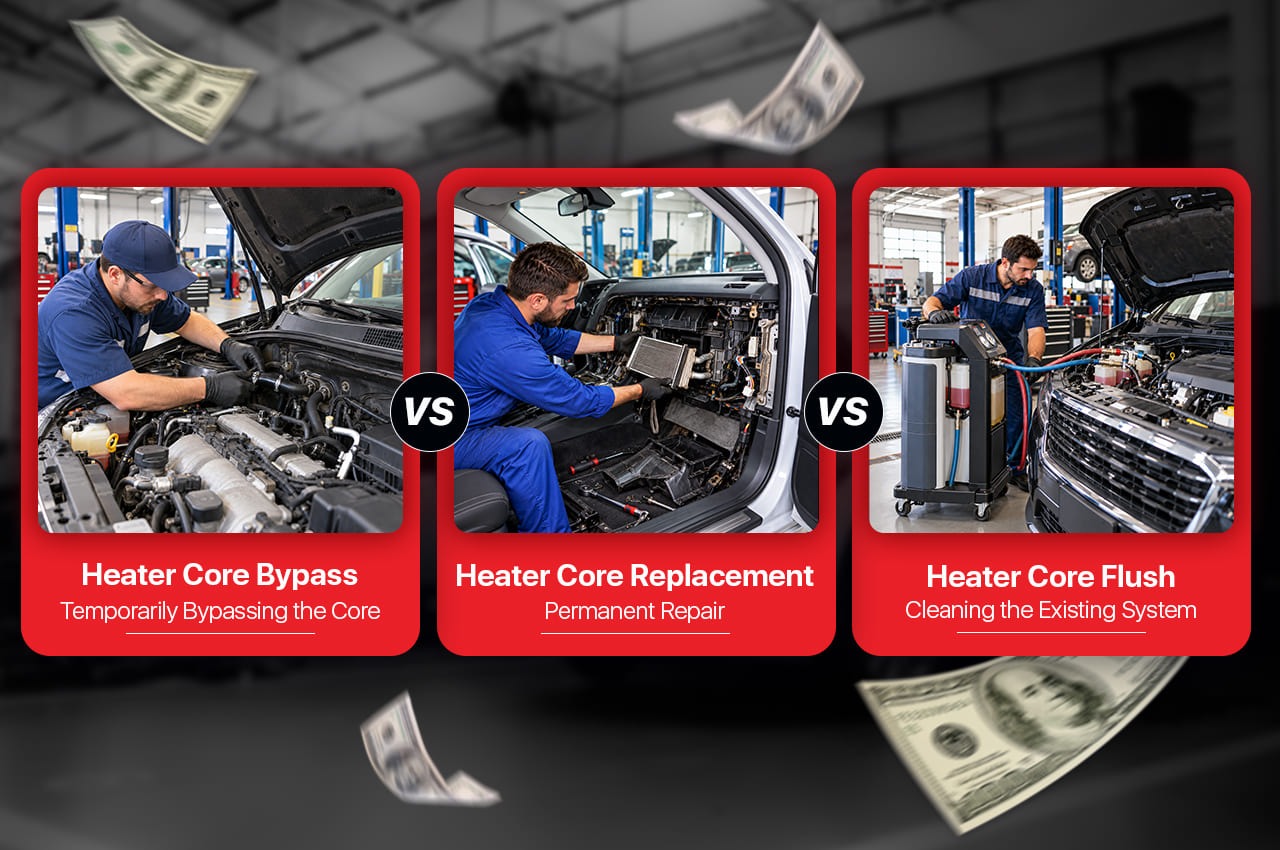

Heater core repair cost ranges from about $100 for a flush to $2,000 or more for a full replacement. That is a wide gap, and it comes down to one thing: whether the heater core can be cleaned where it sits, or whether the dashboard has to come out to replace it.
The heater core itself is usually an inexpensive part. Most of what you pay for is labor. This guide explains what each repair option involves, what it typically costs, and how to tell which one your vehicle needs.
What the heater core does, and signs it is failing
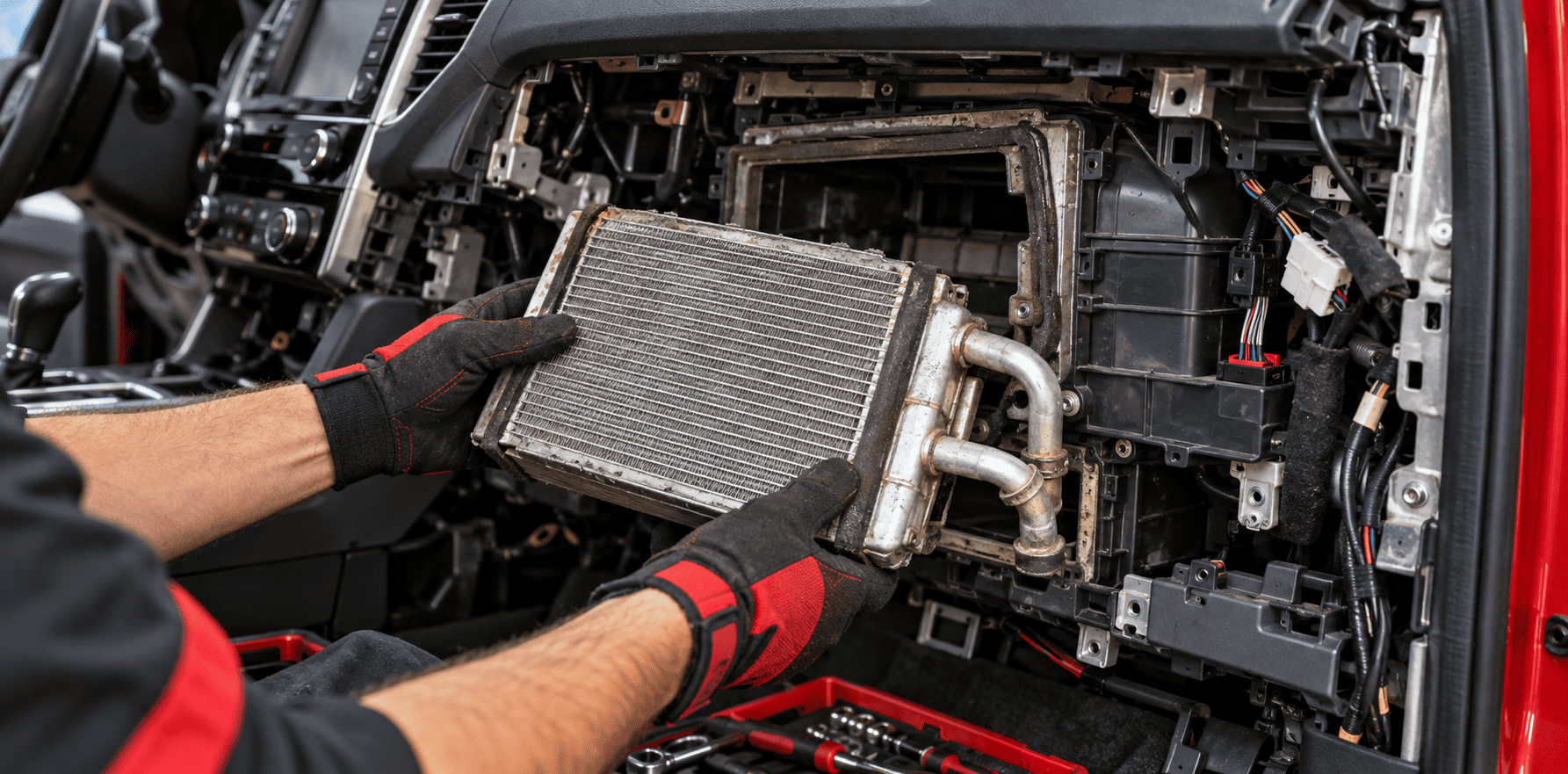
The heater core is a small radiator tucked behind the dashboard. Hot engine coolant flows through it, and the blower fan pushes air across its fins to warm up the cabin and clear the windshield.
Because it depends on coolant, most heater core problems come from leaks or clogs. Common signs include:
- A sweet, syrupy smell inside the car.
- Windows that fog up quickly or leave an oily film.
- Damp carpet on the passenger-side floor.
- Coolant that keeps dropping with no visible leak under the car.
- Weak heat, or heat that blows cold at idle and warms up while driving.
A clog usually shows up as weak or uneven heat. A leak usually shows up as a smell, fog or a wet floor. That difference matters, because it often decides which repair you need.
Heater core repair cost at a glance
The ranges below are typical national estimates as of 2026. Your price will depend on your vehicle and on what an inspection finds.
Repair | Typical cost | Best for | Restores heat? |
Heater core flush | $100 to $250 | A clogged core with no leak | Yes, if the clog clears |
Heater core bypass | $50 to $150 | A short-term stopgap only | No |
Heater core replacement | $1,000 to $2,000+ | A leaking or badly blocked core | Yes |
Flush vs bypass vs replacement, explained
Heater core flush
A flush pushes water or a cleaning solution through the heater core, often in the opposite direction of normal flow, to break loose rust, scale and old coolant sludge. The system is then refilled with fresh coolant and bled air.
A flush works when the core is restricted but not leaking. It does nothing for a core that is already leaking, and a weak core can sometimes start leaking once the buildup holding it together is cleared. If heat comes back strong after a flush, the repair is done. If it doesn’t, replacement is usually next.
Heater core bypass
A bypass reroutes the two heater hoses, so coolant skips the heater’s core entirely. It stops a leak from reaching the cabin and keeps the engine cooling system working, which is why it is the cheapest option.
The tradeoff is serious. With the core bypassed, you lose cabin heat and, more importantly, the ability to defrost the windshield in cold or humid weather. A bypass is a way to keep a car running for a short time until the real repair is scheduled, not a repair in its own right. In a Kansas City winter, it is not a safe long-term fix.
Heater core replacement
Replacement means removing the old core and installing a new one. On most vehicles, the core sits inside the heating and air conditioning housing behind the dashboard, so the job can involve:
- Draining the coolant and, on many vehicles, recovering the AC refrigerant.
- Removing the dashboard, steering column supports, wiring and airbag components.
- Taking out and opening the heating and air conditioning housing.
- Installing the new core and reassembling everything.
- Refilling and bleeding the cooling system, recharging the AC, and testing leaks.
This typically takes 6 to 12 hours of labor, sometimes more on trucks and luxury vehicles. That labor is why replacement costs so much more than the part itself.
What drives heater core repair cost up
Two vehicles with the same failed part can have very different bills. The biggest factors are:
Access
On some vehicles, the core can be reached from the engine side or under the dash. On many, the full dashboard must come out, which multiplies the labor hours.
Vehicle type
Trucks, SUVs with rear heat and luxury vehicles with complex dashboards and electronics usually take longer.
Related parts
Cracked heater hoses, a stuck thermostat, a failing water pump or a worn blend door can add to the bill, and it often makes sense to fix them while the system is open.
AC work
If the refrigerant must be recovered and recharged, that adds time and cost.
Damage from waiting
A leak left too long can soak carpets, damage electronics under the dash, or overheat the engine. All of these cost more than the heater core.
The heater core replacement page explains what the inspection covers, including pressure testing and checking the thermostat and hoses, before any repair is recommended.
How to choose the right repair and keep costs down
Start with a diagnosis, not a part. Weak heat is not always the heater core. Low coolant, air trapped in the system, a stuck thermostat or a failed blend door can cause the same symptom, and each is far cheaper to fix.
Once the heater core is confirmed as the cause, the choice usually follows the symptom:
- Weak heat, no leak: a flush is worth trying first.
- Sweet smell, fog or wet carpet: the core is leaking, and replacement is the lasting fix.
- Leak, but the repair must wait a few days: a bypass can keep the car drivable in mild weather, with a plan to replace the core soon.
To keep the bill from growing, act early. Keep an eye on the coolant level, follow the coolant change interval in your owner’s manual, and don’t ignore a sweet smell or a damp floor. Old, broken-down coolant is one of the main causes of corrosion and clogs that lead to heater core failure.
Fix the cause, not just the symptom
Heater core repair cost depends less on the part and more on what is wrong and how hard it is to reach. A flush is the cheapest real fix when the core is only clogged. A bypass buys time but takes away heat and defrost. Replacement costs the most, but it is the lasting fix for a leak.
If your heat has faded or you’ve noticed a sweet smell in the cabin and want to understand your options, you can reach out to our team.