
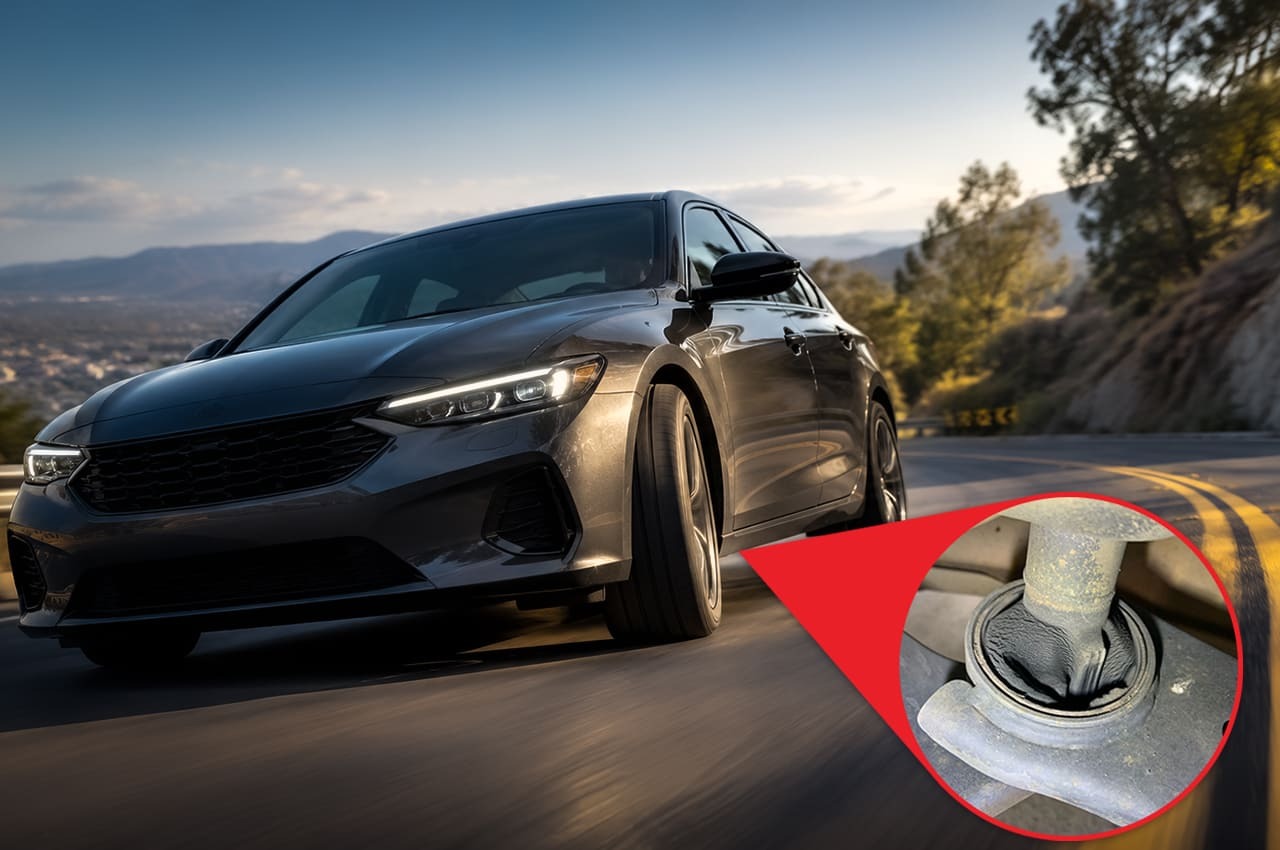

Most drivers think of the suspension as the part that makes a car ride smoothly. It also decides where the wheels point. When control arms and their bushings wear out, the wheels start to move in ways the steering wheel didn’t ask for, and that shows up as wandering, pulling, clunking and a vague feel at highway speed.
The change usually happens slowly, so it is easy to get used to. This guide explains what control arms and bushings do, why they wear, how that wear takes away steering control, and the signs that mean it is time for an inspection.
What control arms and bushings do
A control arm is a hinged link that connects the vehicle’s frame to the steering knuckle, the part that holds the wheel. Most cars and trucks have a lower control arm at each front wheel, and many also have an upper arm. The arms let the wheel move up and down over bumps while keeping it in the right position side to side and front to back.
Three parts do the work at the joints:
Bushings:
Rubber or polyurethane sleeves are pressed into the arm where it mounts to the frame. They let the arm pivot, absorb vibration, and stop metal from hitting metal.
Ball joint:
A ball and socket joint at the outer end of the arm. It lets the wheel steer left and right while the suspension moves.
Mounting points:
Brackets and bolts on the frame or subframe that hold everything at the correct angle.
Together these parts hold the alignment angles that keep your tires flat on the road and your car tracking straight.
Why control arms and bushings wear out
Bushings flex thousands of times on every drive, and over the years that flexing takes its toll. The most common causes of wear are:
Age and heat:
Rubber hardens, cracks and eventually tears away from its metal sleeve.
Oil and fluid leaks:
Oil dripping onto a rubber bushing softens it and speeds up the breakdown.
Impacts:
Potholes: curbs and rough roads load the arm and its joints far beyond normal driving.
Rust and road salt:
Corrosion attacks the arm, its mounting bolts, and the ball joint. Salted winter roads and freeze-thaw potholes around Kansas City are hard on all three.
Heavy loads:
Work trucks, vans, and vehicles that put extra stress on the lower arms, which carry most of the weight.
A torn ball joint boot is a problem of its own. Once dirt and water get inside, the joint wears quickly and develops play.
How suspension wear takes away steering control
Steering only works when the wheels stay where the alignment puts them. Worn bushings and joints let them move, and that affects the car in five ways.
The alignment changes while you drive:
A worn bushing lets the control arm shift under load. When you brake, accelerate or hit a bump, the wheel angle changes for a moment, even if the alignment is measured fine on the rack. The car darts, wanders or pulls, and you end up making constant small corrections.
Braking gets less stable:
Under hard braking, a loose lower arm can move rearward. The front end feels unsettled; the car may pull to one side, and you may hear a clunk as the arm reaches the end of its travel.
Steering feels vague:
Play in the bushings and ball joint means the steering wheel moves further before the tires respond. At highway speed, that dead spot makes lane changes and crosswinds harder to manage.
Tires wear unevenly:
A wheel that keeps changing angle scrubs its tread. Wearing on the inner or outer edge is a common clue, and it reduces grip in rain and snow.
A ball joint can fail:
This is the most serious outcome. A badly worn ball joint can separate, letting the wheel fold out of position, and steering control at that corner is lost.
Warning signs to watch for
Have the suspension checked if you notice any of these:
- Clunking or knocking over bumps, potholes or driveway ramps.
- A clunk or a shift when you break hard or pull away.
- Steering that wanders or needs constant small corrections on a straight road.
- A pull to one side that returns soon after an alignment.
- Vibration through the steering wheel, especially while accelerating.
- Uneven wear on the inner or outer edges of the front tires.
- A steering wheel that sits off-center when driving straight.
Any one of these can have other causes, such as worn tie rods, struts or tires. A hands-on inspection is the way to tell them apart.
What happens during inspection and repair
A suspension inspection is hands-on. With the vehicle raised, a technician checks each bushing for tears and separation, uses a pry bar to look for movement beyond normal flex, and checks the ball joints for play. The arms, mounts, and bolts are checked for rust, bends and damage, and a road test confirms the findings.
Surface cracks on bushing are a sign of age, not always a reason to replace them. Torn rubber, rubber pulling away from its sleeve, or visible slop in the arm.
Repairs usually take one of two forms:
Bushing replacement:
The old bushings are pressed out of the arm, and new ones are pressed in, keeping the original arm and ball joint.
Control arm replacement:
The whole arm is replaced, usually with new bushings and, on many vehicles, a new ball joint has already been installed. On many modern vehicles, this is the more practical option.
You can read more about how the job is done on our control arm replacement page. Either way, a wheel alignment should follow, because even a small change in the arm’s position changes the alignment angles. Replacing worn parts on both sides of the axle also helps keep handling even from left to right.
Small symptoms are worth checking early
Control arm and bushing wear rarely show up at all at once. It builds through small clunks, a little wander and tires that wear faster than they should. Catching it early usually means a simpler repair, fewer tires replaced, and a car that goes where you point it.
If you have a question about a noise or a change in steering feel you’ve noticed, you can reach out to our team.